

Ana Verónica Domingues and Tatiana Morais will undertake internships at international centres of excellence
The sixth edition of the Maria de Sousa Prize, promoted by the Portuguese Medical Association (Ordem dos Médicos) and the BIAL Foundation, has recognised Ana Verónica Domingues and Tatiana Morais, both with projects hosted at the Life and Health Sciences Research Institute (ICVS) of the University of Minho. Created in 2021 in honour of the immunologist and researcher Maria de Sousa, the prize supports young Portuguese researchers aged 35 or under, with projects in the Health Sciences. Each selected project may receive support of up to €30,000 and includes a mandatory internship at an international centre of excellence. The jury for this edition was chaired by neuroscientist Rui Costa, and the awards ceremony took place on 6 November.
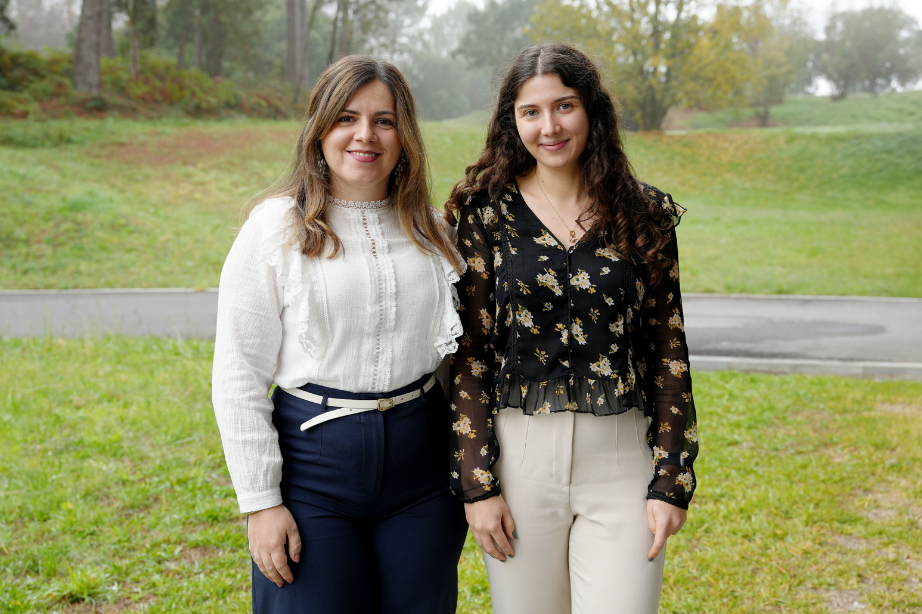
Ana Verónica Domingues, of C2B team, presented the project “Modulation of ventral tegmental area circuits by the endogenous opioid system in learning”, focused on a brain region associated with learning and motivation. Beyond dopamine, whose role is well established, the work will analyse the contribution of another chemical messenger, dynorphin: where the signals reaching this region come from, which cells receive them, and how they may influence learning from positive or negative experiences. This knowledge could help to understand how different forms of communication between brain cells guide behaviour and, in the long term, their possible relationship with psychiatric and behavioural disorders. The internship will take place at the Institute of Molecular and Cellular Pharmacology, University of Côte d’Azur, in France.
Tatiana Morais, of MemAD team, is the author of the project “Behavioural and cognitive modulation in Alzheimer’s disease by astrocytic lipid metabolism”, which will study how changes in astrocyte lipid metabolism may be associated with the brain changes that occur in this disease. The work will track, at different stages of the disease, brain electrical activity, memory and behaviour, and will analyse astrocyte lipids and proteins, with particular attention to APOE and PLD2. The results could help to understand how and when abnormal neuronal activity, seizures and memory decline arise, and to identify new mechanisms, markers and potential therapeutic targets. The internship will take place at the University Hospital Rechts der Isar, Technical University of Munich, in Germany.
