- Research
- Translational Neurogenetics
- Carla M. Abreu
- Cilia
- Molecular Motors
- Brain Development
- Ciliopathies
- Cell Cycle
- DNA Repair
- Meiosis
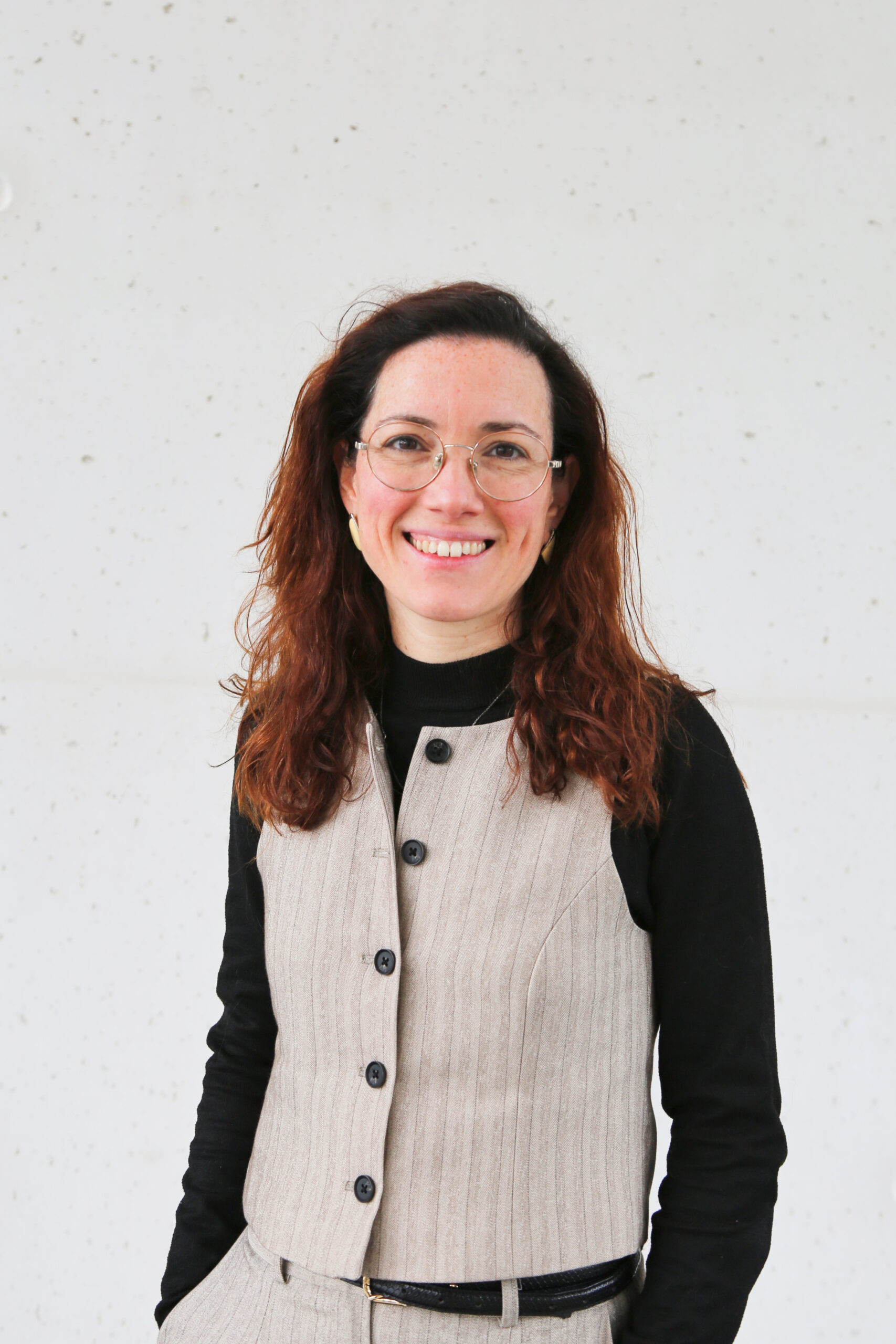
Carla Abreu obtained a BSc in Applied Biology from the University of Minho in 2007. She developed her BSc thesis in Professor Noel Lowndes’ lab at the University of Galway (Ireland), studying cell cycle control in response to DNA damage. She was subsequently awarded an FCT fellowship to pursue her PhD in the same lab (2008-2012). Her research focused on the interplay between cell cycle regulation and DNA damage signaling, combining genetic single-cell models (yeast, chicken/human cells) with proteomics.
In 2013, Carla joined Professor Maria Jasin’s lab at Memorial Sloan Kettering Cancer Center (New York, USA) as a postdoctoral fellow, investigating the impact of developmental disorder- and cancer-associated variants on genome stability and cell proliferation in rodent models.
In 2018, Carla returned to Portugal to establish her independent research at IBMC/i3S (Porto), supported by a CEEC contract and multiple competitive project grants. Her research line focuses on molecular mechanisms regulating cell proliferation and cilia-mediated signaling during development, with particular interest in neurodevelopment and sensory perception. Her team combines genetic, biochemical, and advanced imaging approaches in rodent and C. elegans models. To date, her group has made seminal contributions uncovering key mechanisms governing dynein-2-mediated intraflagellar transport and its links to developmental disorders.
Carla supervised over 30 trainees and collaborates with national/international labs (ICVS, i3S, VU Amsterdam, Universitat Des Saarlandes, Oxford University). She regularly presents at national/international meetings, reviews for renowned scientific journals and funding agencies, and engages in outreach initiatives. She is now transitioning her team to ICVS to integrate into the Translational Neurogenetics team.
- Cilia
- Molecular Motors
- Brain Development
- Ciliopathies
- Cell Cycle
- DNA Repair
- Meiosis
Carla Abreu obtained a BSc in Applied Biology from the University of Minho in 2007. She developed her BSc thesis in Professor Noel Lowndes’ lab at the University of Galway (Ireland), studying cell cycle control in response to DNA damage. She was subsequently awarded an FCT fellowship to pursue her PhD in the same lab (2008-2012). Her research focused on the interplay between cell cycle regulation and DNA damage signaling, combining genetic single-cell models (yeast, chicken/human cells) with proteomics.
In 2013, Carla joined Professor Maria Jasin’s lab at Memorial Sloan Kettering Cancer Center (New York, USA) as a postdoctoral fellow, investigating the impact of developmental disorder- and cancer-associated variants on genome stability and cell proliferation in rodent models.
In 2018, Carla returned to Portugal to establish her independent research at IBMC/i3S (Porto), supported by a CEEC contract and multiple competitive project grants. Her research line focuses on molecular mechanisms regulating cell proliferation and cilia-mediated signaling during development, with particular interest in neurodevelopment and sensory perception. Her team combines genetic, biochemical, and advanced imaging approaches in rodent and C. elegans models. To date, her group has made seminal contributions uncovering key mechanisms governing dynein-2-mediated intraflagellar transport and its links to developmental disorders.
Carla supervised over 30 trainees and collaborates with national/international labs (ICVS, i3S, VU Amsterdam, Universitat Des Saarlandes, Oxford University). She regularly presents at national/international meetings, reviews for renowned scientific journals and funding agencies, and engages in outreach initiatives. She is now transitioning her team to ICVS to integrate into the Translational Neurogenetics team.
Scientific Highlights
Articles
De-Castro, A. R. G., De-Castro, M. J. G., Haasnoot, G. H., Gassmann, R., Peterman, E. J. G., Dantas, T. J.*, & Abreu, C. M. C.* (2025). Removal of the ciliary gate allows axoneme extension in the absence of retrograde IFT. bioRxiv. https://doi.org/10.1101/2025.10.21.683645
Dantas, T. J., Abreu, D. M., De-Castro, M. J. G., De-Castro, A. R. G., Khobrekar, N. V., Rocha, S. A., & Abreu, C. M. C. (2025). Dynein-2 requires HSP90 chaperone activity to ensure robust retrograde IFT and ciliogenesis. Journal of Cell Science, 138(20), jcs264034. https://doi.org/10.1242/jcs.264034
Teixeira, V., Singh, K., Gama, J. B., Moreira, M., Celestino, R., Xavier Carvalho, A., Pereira, P. S., Abreu, C. M. C., Dantas, T. J., Carter, A. P., & Gassmann, R. (2025). CDR2 is a dynein adaptor recruited by kinectin to regulate ER sheet organization. Journal of Cell Biology, 224(9), e202411034. https://doi.org/10.1083/jcb.202411034
De-Castro, A. R. G.*, Rodrigues, D. R. M.*, De-Castro, M. J. G., Vieira, N., Vieira, C., Carvalho, A. X., Gassmann, R., Abreu, C. M. C., & Dantas, T. J. (2022). WDR60-mediated dynein-2 loading into cilia powers retrograde IFT and transition zone crossing. Journal of Cell Biology, 221(1), e202010178. https://doi.org/10.1083/jcb.202010178
De-Castro, A. R. G.*, Quintas-Gonçalves, J.*, Silva-Ribeiro, T., Rodrigues, D. R. M., De-Castro, M. J. G., Abreu, C. M., & Dantas, T. J. (2021). The IFT20 homolog in Caenorhabditis elegans is required for ciliogenesis and cilia-mediated behavior. microPublication Biology, 2021, 000396. https://doi.org/10.17912/micropub.biology.000396
Abreu, C. M., Prakash, R., Romanienko, P. J., Roig, I., Keeney, S., & Jasin, M. (2018). Shu complex SWS1–SWSAP1 promotes early steps in mouse meiotic recombination. Nature Communications, 9, 3961. https://doi.org/10.1038/s41467-018-06384-x

Add Your Heading Text Here
Contact us
Phone: +351 253 604 967
Fax: +351 253 604 809
Email: icvs.sec@med.uminho.pt
Address
Life and Health Sciences
Research Institute (ICVS)
School of Medicine,
University of Minho,
Campus de Gualtar
4710-057 Braga
Portugal
Copyright ©2025 ICVS. All Rights Reserved. Developed by TCIT
Address
Life and Health Sciences
Research Institute (ICVS)
School of Medicine,
University of Minho,
Campus de Gualtar
4710-057 Braga
Portugal
Copyright ©2025 ICVS. All Rights Reserved
Address
Life and Health Sciences
Research Institute (ICVS)
School of Medicine,
University of Minho,
Campus de Gualtar
4710-057 Braga
Portugal