Marcelina Węzik

  • endogenous opioids
  • fiber photometry
  • associative learning
  • reward
  • aversion
  • nucleus accumbens
  • ventral tegmental area

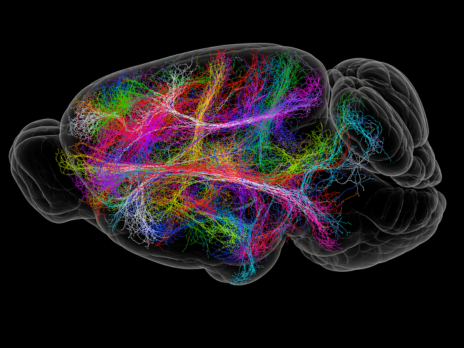
Marcelina Węzik graduated with a Bachelor’s degree in Human Biology from the University of Wroclaw (Poland) in 2018. During an Erasmus exchange at the University of Barcelona, she developed a strong interest in reward-related neural circuits. To pursue a Master’s degree in Neuroscience she moved to Italy to study at the University of Trieste. During her Master’s studies, she carried out her thesis project internship at ICVS (supervision of Ana Joao Rodrigues, PhD and Carina Cunha, PhD), focused on validating newly developed endogenous opioid sensors in-vivo using fiber photometry in mice during rewarding and aversive events. Following her Master’s degree, she worked as a research technician, working on an unbiased whole-brain analysis using the TRAP mouse model to map neuronal activity during rewarding and aversive events. She is currently a PhD student in Biomedicine and Health Sciences (Neuroscience) at the University of Minho and a visiting doctoral student at the University of Washington (Seattle, USA) (supervision of Michael Bruchas, PhD). Her doctoral research investigates how endogenous opioids regulate neuronal circuits underlying associative learning, particularly within the nucleus accumbens and ventral tegmental area, combining animal behavior, optogenetic and pharmacological manipulations, fiber photometry and 2-Photon imaging.

Marcelina Węzik

  • endogenous opioids
  • fiber photometry
  • associative learning
  • reward
  • aversion
  • nucleus accumbens
  • ventral tegmental area

Marcelina Węzik graduated with a Bachelor’s degree in Human Biology from the University of Wroclaw (Poland) in 2018. During an Erasmus exchange at the University of Barcelona, she developed a strong interest in reward-related neural circuits. To pursue a Master’s degree in Neuroscience she moved to Italy to study at the University of Trieste. During her Master’s studies, she carried out her thesis project internship at ICVS (supervision of Ana Joao Rodrigues, PhD and Carina Cunha, PhD), focused on validating newly developed endogenous opioid sensors in-vivo using fiber photometry in mice during rewarding and aversive events. Following her Master’s degree, she worked as a research technician, working on an unbiased whole-brain analysis using the TRAP mouse model to map neuronal activity during rewarding and aversive events. She is currently a PhD student in Biomedicine and Health Sciences (Neuroscience) at the University of Minho and a visiting doctoral student at the University of Washington (Seattle, USA) (supervision of Michael Bruchas, PhD). Her doctoral research investigates how endogenous opioids regulate neuronal circuits underlying associative learning, particularly within the nucleus accumbens and ventral tegmental area, combining animal behavior, optogenetic and pharmacological manipulations, fiber photometry and 2-Photon imaging.

Scientific Highlights

Relevant publications:
1. Domingues A.V., Carvalho T.T.A., Martins G.J., Correia R., Coimbra B., Bastos-Gonçalves R., Wezik M., Gaspar R., Pinto L., Sousa N., Costa R.M., Soares-Cunha C., Rodrigues A.J. (2025). Dynamic representation of appetitive and aversive stimuli in nucleus accumbens shell D1- and D2-medium spiny neurons. Nature Communications, 16:59.https://doi.org/10.1038/s41467-024-30317-2
2. Deseyve, C., Domingues, A. V., Carvalho, T. T. A., Armada, G., Correia, R., Vieitas-Gaspar, N., Wezik, M., Pinto, L., Sousa, N., Coimbra, B., Rodrigues, A. J., & Soares-Cunha, C. (2024). Nucleus accumbens neurons dynamically respond to appetitive and aversive associative learning. Journal of Neurochemistry, 168(3), 312–327. https://doi.org/10.1111/jnc.16063
3. Correia, R., Coimbra, B., Domingues, A. V., Wezik, M., Vieitas-Gaspar, N., Gaspar, R., Sousa, N., Pinto, L., Rodrigues, A. J., & Soares-Cunha, C. (2023). Involvement of nucleus accumbens D2-medium spiny neurons projecting to the ventral pallidum in anxiety-like behaviour. Journal of psychiatry & neuroscience : JPN, 48(4), E267–E284. https://doi.org/10.1503/jpn.220111
Conferences:
1. Wezik M., Gowrishankar R, Soares-Cunha C., Rodrigues A. J.& Bruchas M.R., “NAc shell Pdyn neurons’ activity modulates dopamine dynamics during associative learning”. SFN Conference San Diego, CA, USA, November 2025 (poster)
2. Wezik M., Gowrishankar R, Soares-Cunha C., Rodrigues A. J.& Bruchas M.R., “Dopamine dynamics during associative learning are modulated by NAc Shell Pdyn neurons”. GRC Catecholamines Conference Newry, ME, USA, August 2025 (poster)
3. Wezik M., Gowrishankar R., Domingues A. V., Carvalho T., Soares-Cunha C., Bruchas M. R., J. Rodrigues A. “NAc-VTA dynorphin modulation of dopamine dynamics in associative learning”. Conference on the Therapeutic Potential of Kappa Opioids in Pain and Addiction, St. Louis, MO, USA, March 2025 (poster)
4. Wezik M., Coimbra B., Correia R., Gaspar R., Vieitas-Gaspar N., Gonçalves R., Terrier C., Soares-Cunha C., Rodrigues A. J. “Whole-brain mapping of neuronal ensembles responsive to positive and negative stimuli”. Neuronus 2022 Neuroscience Forum, Krakow, Poland, October 2022 (oral presentation)
Awards:
1. Best Poster Presentation, “Whole-brain mapping of cocaine-recruited ensembles”, ICVS Retreat 2024, Braga, Portugal, 2024
2. PhD Studentship, Fundação para a Ciência e a Tecnologia (FCT), Portugal, 2023
3. Travel Grant, NEURONUS 2022 IBRO Neuroscience Forum, Krakow, Poland, October 2022
4. Erasmus Scholarship, University of Wroclaw, Poland, 2019


Add Your Heading Text Here

Projects

As Leader

Projects

As Member